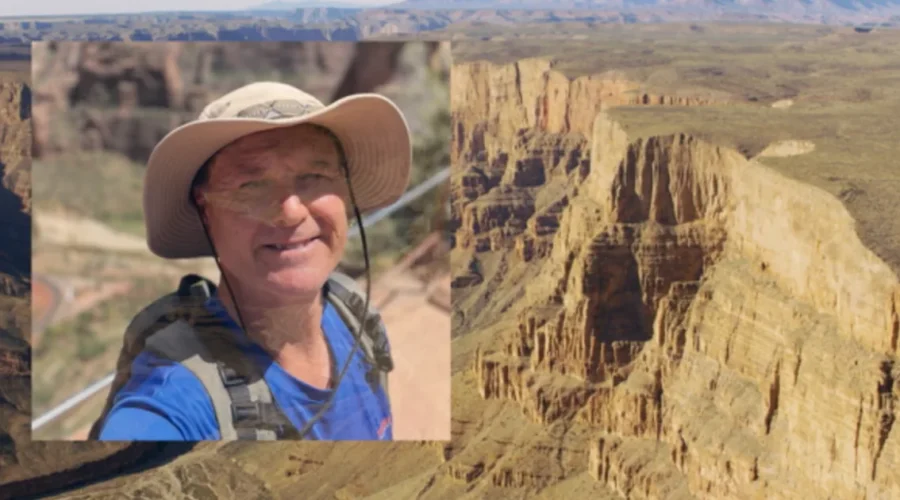
GRAND CANYON VILLAGE, AZ — Search and rescue crews are expected to again work the Grand Canyon’s South Rim as officials continue looking for a 53-year-old Texas hiker missing after Saturday’s flooding. Timothy Allen Smith was hiking with two friends when the storm hit, and authorities say he may have been swept away by floodwaters.
His hiking partners, Dr. John Giusti and Brent Rosenkranz, were found dead. The three men had traveled from Texas to hike and camp at the canyon together, a trip that turned deadly as rain and runoff overwhelmed parts of the area.
Officials said Wednesday they had received about 200 tips. Even with that volume of calls, they said they have not identified any other missing people tied to the flooding, and the search remains focused on Smith.
Heavy rain sent floodwater and debris through camping areas in rapid waves
The flooding developed after four rounds of heavy rain fell in quick succession in places including Phantom Ranch. The water triggered flash flooding that sent waves of water, debris and muddy runoff toward campers in the canyon.
That sudden surge created a dangerous rescue scene. National Park Service officials said 82 people had to be rescued after the flooding, while the Arizona Department of Public Safety said its crews carried out 13 helicopter rescue operations and hoisted 61 people to safety on Saturday and Sunday.
The storm damage also left officials with lingering questions about whether campers could have been warned or moved sooner. Those questions have not been answered publicly, but they remain part of the broader review of what happened as conditions worsened in the canyon.
Water pipeline damage forced stage 4 restrictions as the park dealt with flood fallout
The flood did more than threaten people. Officials said significant damage to a water pipeline led to stage 4 water restrictions in the area, adding another layer of disruption after the storm.
Those restrictions are part of the park’s response to the emergency and the damage left behind. Officials also said they were sharing steps visitors and others could take to reduce water use while crews dealt with the pipeline impacts.
The water problems underline how widely the flooding affected the South Rim. It was not just a rescue operation. It also became a utility and infrastructure problem, with park managers trying to protect limited resources while continuing the search and recovery effort.
Some stream gauges went offline as floodwater hit the South Rim
On Monday, National Park Service officials said some of the water gauges at the South Rim went offline during the flooding. Deputy Superintendent Brian Drapeaux said officials were not yet sure whether debris flow knocked them out or whether another factor put them out of service.
The U.S. Geological Survey later said there were four stream gauges installed at the South Rim. Two of them were washed away, but they were still able to collect and send data to park officials until about 2:30 p.m. and 2:45 p.m. Saturday, when both went offline.
The two remaining gauges continued sending data and updates. That information helped track conditions as the flood developed, even while some of the equipment failed in the blast of water.
USGS crews plan to re-enter the flood zone and replace damaged equipment
Jamie Macy of the U.S. Geological Survey said teams are working with National Park Service officials to get back into the flood zone and begin replacing the missing gauges. The goal is to restore monitoring as soon as it is safe to do so.
Macy said the agency needs to assess the flooding, measure the magnitude of the flow and survey the high-water marks to estimate how much water moved through Bright Angel Creek. That work will also help determine the extent of the damage to the gauges themselves.
The gauges are solar and battery-powered and are designed to send hourly data to rangers. Macy said the system is used to monitor both flooding and drought, making the equipment important long after the immediate danger passes.
Search crews still have one missing person to find after the weekend storm
For now, the focus remains on Smith and the canyon search tied to the weekend storm. Officials have not said that any other people are missing, despite the many tips they have received and the scale of the rescue effort.
The case has become one of the most serious flood incidents at the Grand Canyon in recent memory, combining a missing-person search, recovery efforts for the dead and damage to critical park infrastructure. Crews are expected to continue working the South Rim as conditions allow.
The flooding also left officials with a full list of unresolved issues: how the storm escalated so quickly, what warnings were possible, and how the park can restore monitoring systems after floodwaters tore through the area.
Local stories that matter, from Fairmont Flyer.